30 Sep 2026
Highlights:
The role of the Continuing Airworthiness Management Organization (CAMO) is evolving rapidly. Traditionally focused on ensuring aircraft remain airworthy through maintenance planning, records management, and regulatory compliance, CAMO is becoming increasingly digital, data-driven, and predictive.
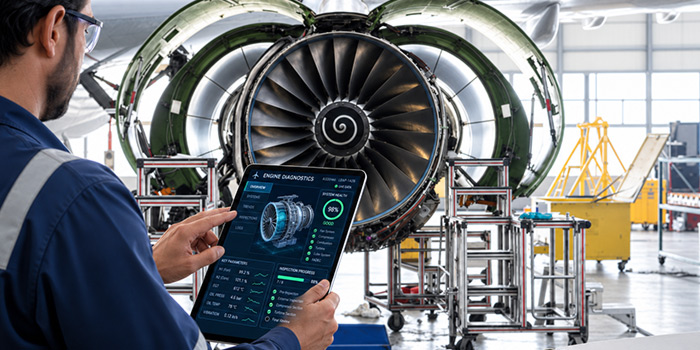
As airlines face larger fleets, aging aircraft, supply chain constraints, and increasingly complex regulatory requirements, artificial intelligence (AI), integrated data platforms, and remote collaboration are redefining how continuing airworthiness is managed.
The future of CAMO is no longer about simply maintaining compliance—it's about using technology to anticipate issues before they occur, improve operational efficiency, and support smarter maintenance decisions.
From Reactive Maintenance to Predictive Airworthiness
For decades, maintenance planning has relied largely on scheduled inspections, historical maintenance records, manufacturer recommendations, and engineering expertise.
Today, advances in aircraft health monitoring, artificial intelligence, and predictive analytics are enabling operators to move toward condition-based and predictive maintenance.
Modern aircraft generate enormous volumes of operational data—from engine health monitoring and avionics to flight operations and component performance. AI can analyze this information to identify trends, detect anomalies, and predict potential failures long before they become operational disruptions.
According to IATA, predictive maintenance can significantly reduce unscheduled maintenance events while improving aircraft availability and operational reliability.
Rather than reacting to component failures, CAMO teams are increasingly able to plan maintenance proactively, reducing aircraft downtime and minimizing disruption to operations.
AI Is Supporting Engineers—Not Replacing Them
Artificial intelligence is becoming a valuable decision-support tool within CAMO, assisting engineers by automating repetitive administrative tasks while allowing technical experts to focus on safety-critical decisions.
Emerging AI applications include:
- Automated maintenance record analysis
- Airworthiness Directive (AD) monitoring
- Service Bulletin (SB) assessment
- Maintenance forecast optimization
- Reliability trend analysis
- Technical document search and classification
- Digital records verification
Importantly, AI is not replacing licensed engineers.
Regulatory responsibility for continuing airworthiness remains firmly with qualified CAMO personnel, whose engineering judgment and regulatory expertise remain essential.
Instead, AI reduces administrative workload, enabling engineers to make faster, better-informed decisions.
Remote CAMO Is Becoming Operational Reality
Digital collaboration tools are transforming how continuing airworthiness is managed across geographically dispersed fleets.
Cloud-based maintenance systems now allow CAMO specialists to:
- Review aircraft technical records remotely
- Monitor fleet compliance in real time
- Coordinate maintenance providers globally
- Support aircraft transitions and lease returns
- Conduct engineering reviews across multiple locations
Remote CAMO capabilities have become increasingly valuable for operators managing international fleets or supporting aircraft operating in multiple jurisdictions.
Rather than requiring every engineering decision to occur onsite, digital platforms allow technical specialists to provide oversight wherever the aircraft is located.
Data Integration Is Breaking Down Operational Silos
One of the biggest challenges facing airlines is fragmented maintenance information.
Aircraft data often resides across multiple systems, including:
- Maintenance & Engineering (M&E)
- Enterprise Resource Planning (ERP)
- Flight Operations
- Inventory Management
- Reliability Programs
- Aircraft Health Monitoring Systems
- OEM platforms
The future of CAMO depends on connecting these systems into a single digital ecosystem.
Integrated data enables engineers to understand not only what maintenance is required, but why it is occurring and how operational decisions affect long-term aircraft reliability.
Organizations that successfully integrate operational and technical data gain greater visibility into fleet performance and can make more informed maintenance decisions.
Predictive Compliance: The Next Evolution of Continuing Airworthiness
Compliance has traditionally focused on verifying that maintenance activities are completed within regulatory intervals.
The next generation of CAMO will move toward predictive compliance—using digital tools and analytics to anticipate compliance risks before they occur.
Examples include:
- Identifying upcoming Airworthiness Directive deadlines
- Predicting maintenance planning conflicts
- Monitoring recurring technical defects
- Tracking component life limitations
- Forecasting maintenance capacity requirements
- Alerting engineers to documentation gaps before audits
Rather than discovering issues during regulatory inspections, predictive compliance enables organizations to identify and resolve potential risks early, strengthening both safety and operational resilience.
Digital Transformation Requires Skilled People
While technology is reshaping CAMO, people remain at the center of continuing airworthiness.
Artificial intelligence cannot replace:
- Engineering judgment
- Safety oversight
- Regulatory interpretation
- Risk assessment
- Operational decision-making
Instead, tomorrow's CAMO professionals will require an expanded skill set that combines technical expertise with digital literacy, data interpretation, and systems thinking.
As airlines continue investing in digital transformation, workforce development will become just as important as technology investment.
How AviaPro Supports the Future of CAMO
At AviaPro, we recognize that successful continuing airworthiness management is built on both technical expertise and intelligent technology.
Our CAMO specialists support airlines, lessors, operators, and aviation organizations through comprehensive continuing airworthiness services, including:
- Continuing Airworthiness Management (CAMO)
- Maintenance planning and program optimization
- Airworthiness Directive (AD) and Service Bulletin (SB) compliance
- Aircraft records review and technical audits
- Reliability program support
- Aircraft transitions and lease return management
- Technical due diligence and inspections
- Digital maintenance process improvement
- CAMO strategy and operational advisory
By combining regulatory expertise with data-driven processes and digital solutions, we help organizations strengthen compliance, improve maintenance efficiency, reduce operational risk, and prepare for the next generation of continuing airworthiness management.
Looking Ahead
The future of CAMO is about far more than keeping aircraft compliant. It is about creating connected, intelligent maintenance ecosystems where data, engineering expertise, and digital technologies work together to improve safety, reliability, and operational performance.
Organizations that embrace AI-assisted planning, integrated maintenance data, remote collaboration, and predictive compliance will be better positioned to manage increasingly complex fleets while maintaining the highest standards of continuing airworthiness.
In aviation, compliance will always remain essential—but the future belongs to organizations that can predict, optimize, and continuously improve before issues ever leave the ground.
Sources
- 1. European Union Aviation Safety Agency (EASA) – Continuing Airworthiness Regulations (Part-M, Part-CAMO & Part-145)
- 2. European Union Aviation Safety Agency (EASA) - EASA Concept Paper: Guidance for safety-related artificial intelligence applications
- 3. International Civil Aviation Organization (ICAO) – Safety Management and Airworthiness Guidance
- 4. International Air Transport Association (IATA) – Digital Transformation and Maintenance Resources
- 5. Airbus – Skywise Platform (predictive maintenance and digital aviation)
- 6. Boeing – AnalytX (digital maintenance analytics and fleet optimization)
- 7. ICAO Global Air Navigation Plan (GANP) – Digitalization and aviation system modernization
AviaPro Newsroom
+1 416-544-9969
info@aviaproconsulting.com

Editorial Contacts