28 May 2026
Highlights:
Artificial intelligence isn’t the future of travel — it’s already here. Data from industry forecasters like OAG show that AI is reshaping the customer experience, collapsing once-fragmented planning journeys into single conversational layers and redefining how travelers search, plan, and book journeys. In its long-term outlook on travel in the AI era, OAG notes that travelers increasingly interact with AI systems that can access millions of options, anticipate needs and deliver personalized suggestions faster than ever before — signaling a structural shift in traveler behaviour and expectations.
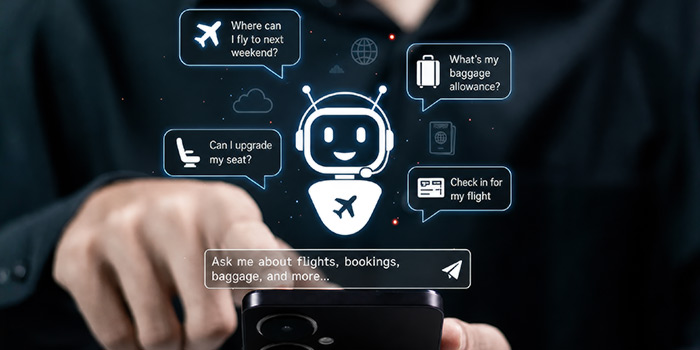
While not all travelers use AI at every stage yet, the convenience and personalization it offers are pushing adoption higher across demographics. Other sources report that large percentages of travel companies and consumers embrace AI tools for everything from trip planning and chat support to real-time itinerary updates and recommendations. One snapshot of industry adoption indicates that a majority of travelers now prefer AI-enhanced services and that AI features significantly boost booking conversion and satisfaction.
However, despite AI’s clear potential, human travel behaviours and structural realities remain remarkably stable. A forward-looking AI travel forecast identifies ten enduring truths — from travelers’ desire for better pricing and stress reduction to persistent fragmentation of supply and the continued importance of trust and scale — that will anchor the future of travel design and delivery.
10 Conditions Every Travel Provider Must Build For
The next era of AI-driven travel isn’t just about technology — it’s about meeting long-standing human and market realities:
- 1. Humans are lazy — travelers want effortless planning.
- 2. Travel will always be stressful — systems must reduce anxiety.
- 3. Travelers chase better prices — smarter pricing engines matter.
- 4. Travelers want control — recommendations, but final decisions.
- 5. Travelers crave a little magic — curated surprises deepen engagement.
- 6. Supply will stay fragmented — integration remains essential.
- 7. Infrastructure won’t scale with demand — smarter systems help bridge gaps.
- 8. Travel demand clusters in popular places — drives personalization needs.
- 9. Trust drives choices — transparent AI interactions build loyalty.
- 10. Scale remains decisive — incumbents with data advantage will lead.
In other words: AI may power interfaces and personalization, but customer behavior and core industry mechanics still define the travel experience. Airlines and travel brands that succeed will not simply deploy cutting-edge tools — they will embed intelligence into decisions that shape the entire customer journey.
Where AI Is Already Delivering Value
AI adoption in travel is broad, and practical benefits are emerging across multiple touchpoints:
- Booking & personalization — AI features like personalized recommendations and conversational trip planning are driving higher engagement and conversion for digital travel brands.
- Customer support & service — AI chatbots and virtual assistants handle routine inquiries efficiently, offering around-the-clock responsiveness that travelers increasingly expect.
- Operational responsiveness — AI applications are beginning to reduce friction at points of stress (e.g., flight disruptions) by anticipating issues and improving decision workflows for frontline teams.
But the journey isn’t linear. Many travelers still want human oversight and control, especially for complex decisions that involve emotion, trust, safety and experience preferences — and airlines will need to strike the right balance between automation and human judgment to succeed.
How AviaPro Helps Airlines Build Better Customer Experience
AviaPro works with airlines and aviation stakeholders to navigate this shift toward intelligent, data-rich travel experiences. We help clients:
1. Translate AI Potential into Operational Reality
Not all AI investments deliver measurable value. We help airlines align AI use cases with business outcomes — from enhanced pricing strategies to personalized offer optimization and customer support automation.
2. Integrate Fragmented Data
Trusted, quality data is the foundation of reliable AI systems. AviaPro supports data integration across customer, operational and commercial systems to enable personalized experience engines that travel providers can rely on.
3. Define Passenger Experience KPIs
We help airlines define and measure customer experience performance — turning abstract goals into measurable indicators that align with loyalty, retention and revenue objectives.
4. Develop Governance & Execution Frameworks
AI systems require stewardship, not just deployment. Our advisory ensures that AI governance, model oversight, compliance and human-in-the-loop practices are embedded into airline processes.
In a world where AI will handle more of the work but human behavior still drives decision points, airlines that combine intelligent systems with deep operational insight will win. The future of travel isn’t just automated — it’s experience-centric, data-informed and grounded in the realities travelers know best.
Sources
- OAG – Travel 2045: The Future of Travel in the Age of AI
- OAG Blog – Three Smart Ways Airlines Are Using AI to Improve Operations
- OAG – Why Aviation’s AI Future Hinges on Data Quality
- Zipdo – Artificial Intelligence in Travel Industry Statistics
- WiFiTalents – AI in the Travel Industry Statistics
AviaPro Newsroom
+1 416-544-9969
info@aviaproconsulting.com

Editorial Contacts